
When I was a wee lad, I attended a Shingon Buddhist church in Hawaii. My entire extended family, at least two generations before me, had been members for decades before and most still are today. One of the periodic “treats” that would be made was this red bean and rice dish. It was a way for the Reverend to disseminate his blessing through the congregation.
It is a Buddhist dish, so it’s very simple. The red beans (azuki beans) and rice (a mixture of Japanese short-grained rice and mochi sweet rice) are the only ingredients. Hard-core ascetic. No furikake, tsukemono, umeboshi, wasabi, shoga, teriyaki, shoyu, ponzu, dashi, ocha, curry sauce … nothing else. No salt, sugar, spices. Just boiled red beans and rice.
So it makes a great addition to a Bodhi Day spread, an alternative to the traditional milk and rice dish, which was served to Siddhartha Gautama at the Bodhi Tree.
As the song in School of Rock goes, “You’re not hardcore, unless you live hardcore …”
Red Rice with Azuki Beans (Sekihan–Temple Style)
The rice and beans is called sekihan—literally red rice—traditionally made with azuki beans. The rice is tinted by the bean cooking liquid rather than seasoned, and the flavor is intentionally restrained.
The red color traditionally symbolizes protection and purification. Azuki beans are commonly used in Buddhist contexts for this reason. This version aligns with shōjin ryōri (traditional plant-based Buddhist cooking) sensibilities: simple, plant-based, and non-indulgent.
Ingredients
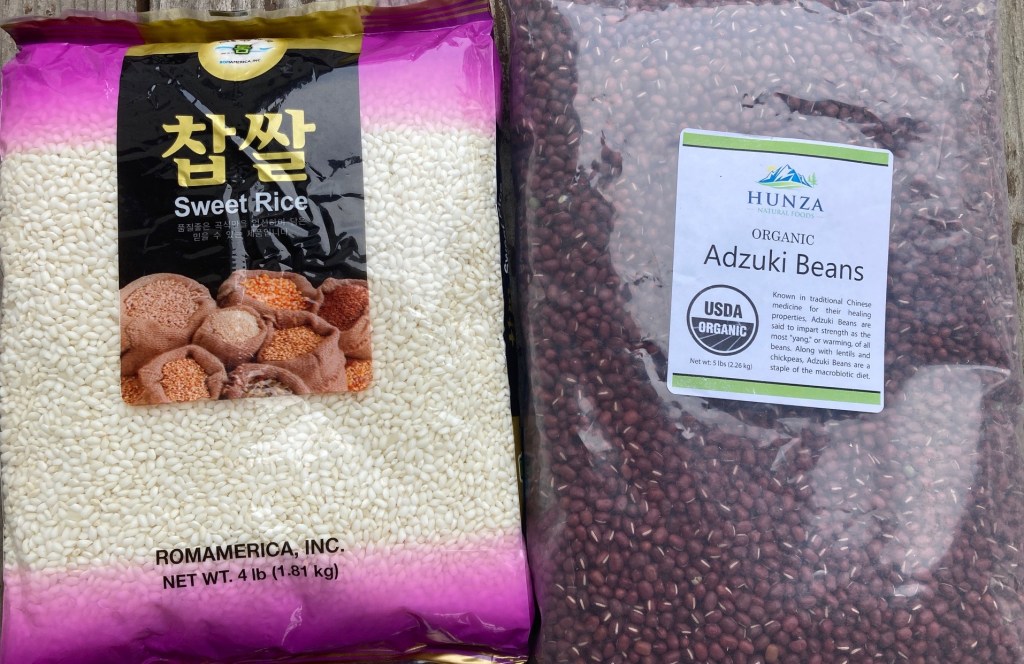
- 2 cups mochigome (Japanese glutinous rice)
(or 1 cups mochigome + 1 cup regular Japanese short-grain rice) - ½ cup azuki beans (small red beans)
- Water
Making the Sekihan
1. Cook the azuki beans
- Rinse the azuki beans.
- Place them in a pot with plenty of water and bring to a boil for 2–3 minutes.
- Drain and discard this first water (this removes bitterness).
- Add fresh water and simmer gently for 30–40 minutes, until the beans are tender but still hold their shape.
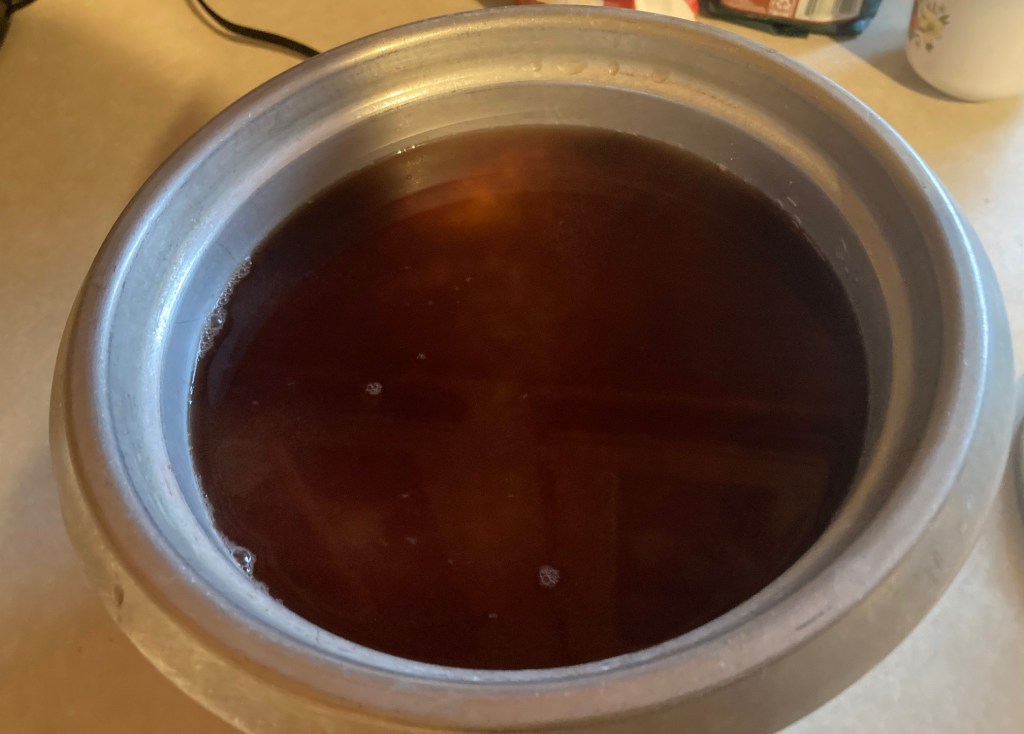
- Drain the beans, reserving the cooking liquid. This liquid is what gives the rice its color.
Set the beans aside.
2. Prepare the rice
- Wash the rice until the water runs mostly clear.
- Drain well.
- Add the reserved azuki cooking liquid to the rice.
Use it as part (or all) of the cooking liquid you would normally use for rice. That is, at least the same volume of water and rice, so at least 2 cups. Mrs. Hanamoku would add about 25% more water. If there isn’t enough, top up with plain water.
3. Cook
Hopefully you have a rice cooker! Use the standard white rice or mixed rice setting.
Otherwise, here is the very tedious method for cooking rice manually:
- Traditional (manual, pot-steamed method)
- This is how the rice would be cooked without a rice cooker, using a pot and steam.
- Combine rice and liquid:
- Place the washed and drained rice into a heavy-bottomed pot.
- Add the reserved azuki cooking liquid (topping up with water if needed) so the liquid level sits just above the rice, as you would for normal rice.
- Bring to a boil: Set the pot uncovered over high heat. Once the liquid comes to a rolling boil, give the rice one gentle stir to prevent sticking.
- Cover and steam: Reduce heat to low, cover the pot tightly, and let the rice steam undisturbed for about 15 minutes.
- At this stage, the rice is absorbing liquid and cooking by steam rather than boiling.
- Rest: Turn off the heat and leave the pot covered for another 10 minutes.
This resting period finishes the cooking and evens out moisture. - Finish and fold: Remove the lid, gently fluff the rice, and fold in the azuki beans.
4. Combine
Once the rice is cooked:
- Gently fold in the azuki beans. Do not mash.
- Let the rice rest for about 10 minutes.
To Serve
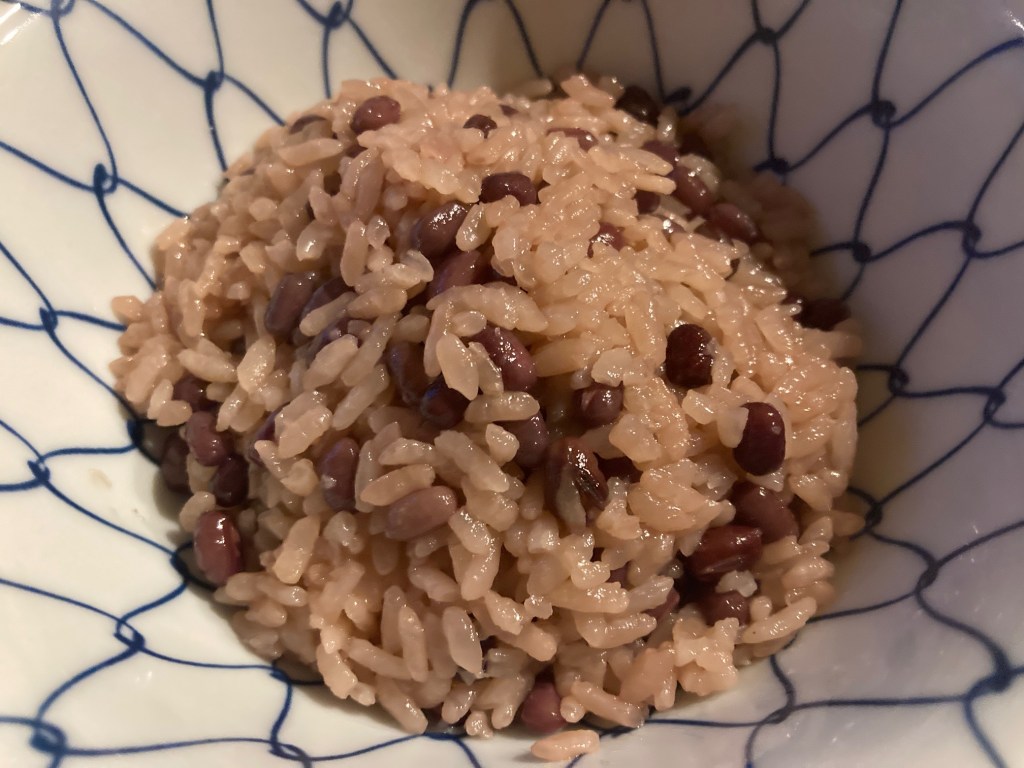
Dish up a modest serving (about the same volume as a large baked potato) in a humble chawan or any small bowl.
If you’d like to share this with the neighbors, wrap the servings in unbleached parchment paper non-stick, food-safe, heat resistant). Then toss on your monk’s robe and zoris, grab a walking stick, and deliver to your neighbors.
If you make it from this recipe on any Bodhi Day (the secular or lunar), it is automagically blessed by the Eternal Fishnu and the Rubber Ducky Buddha of Joliet.
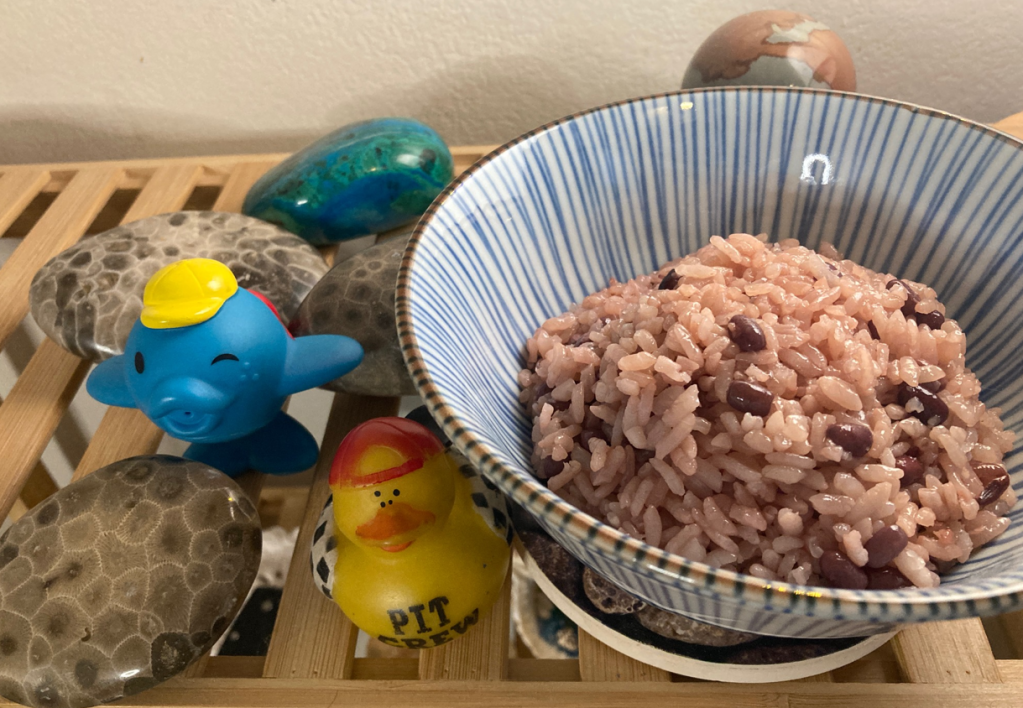
Lastly, go ahead, sprinkle some salt on it, the Eternal Fishnu likes salt … even though that’s not hardcore. It does add a whole lot more flavor. For you “Southern Buddhists”, you have the Eternal Fishnu’s blessing to substitute New Orleans red beans and rice.
The Lunar Bodhi Day
A few days from today is the Lunar Bodhi Day for the Chinese Year 4723 (the Chinese calendar is a lunar calendar). Monday, January 26, 2026 is the 8th day of the 12th lunar month. Please see the blogs I posted for the “secular” Bodhi Day celebrated this past Dec 8: My special prep message for 2025, meditation for this Bodhi Day, and my message posted on Bodhi Day.
Remember, the Lunar Bodhi Day is different every year, so check on the home page for the latest dates.
Faith and Patience,
Reverend Dukkha Hanamoku
 Bodhi Day