

Like many, I grew up thinking the word “stoic” or “stoically” was just an adverb that mostly means standing full on to the battle seemingly fearless with grit and determination. I didn’t know that it is a rich school of philosophy, from which, “stoically” is much more nuanced than any single word.
Having grown up in small towns of pre-Internet Hawaii and being of Japanese ancestry, the philosophy of my normal life was a “pidgin” mix of Shingon Buddhism, Daoism from a couple of wise aunties, and Zen. Later, I did learn of Stoicism, but my superficial attempt mostly found it close enough to Zen, whereby I put it back on the bookshelf of my attention. I thought of it as just a “Western version of Zen”.
Before continuing, I’d like to point out that wisdom is wisdom. I say this because I’m not comparing whether Zen is better or worse than Stoicism. Human history is long enough where we’ve mixed and matched nuggets of brilliance to the point where we’ll never really know where anything truly originated. I’ve often included Christian references on this site – I especially love Psalm 23. I’ve also referenced Heraclitus’ quote, “You cannot step into the same river twice”. Lastly, my Bahai friends taught me, “Different lamps, same light”.
Revisiting Stoicism
I revisited Stoicism a couple of years ago after suffering what seemed like a bad case of Covid – but it was probably pneumonia. Either way, I was more ill than I’d ever been. We were a six hour drive through a summer desert from home when I fell ill. With a 103 F fever, we decided to drive back home while Mrs. Hanamoku was still healthy (fortunately, she didn’t catch what I had). We drove back towards home through a desert with a temperature matching my fever. I thought that if we broke down, I don’t know how long I would last in that heat.
This was the first time I genuinely thought I would die. But I wasn’t afraid at all. My Zen training provides me with a fully-assimilated understanding that there is much more to what we humanly experience. This “death” is just a transition to something else – entirely different, but not the end. Besides, after a year and a half of Covid, I think we all at least had a suitcase halfway packed for a potential trip to the hospital. This was the Summer of 2021 when we were still bombarded by reports of Covid leading to a ventilator in the hospital.
With that acceptance of imminent death, I caught myself thinking, “I’m ‘stoically’ facing death”. But for me, who is not a PhD in Greek Philosophy, that defaults to meaning I was facing it free from emotion. There’s certainly more to Stoicism than that. I made a mental note that I would later dig deeper into it should I survive.
Stoicism and the Teachings of the Eternal Fishnu
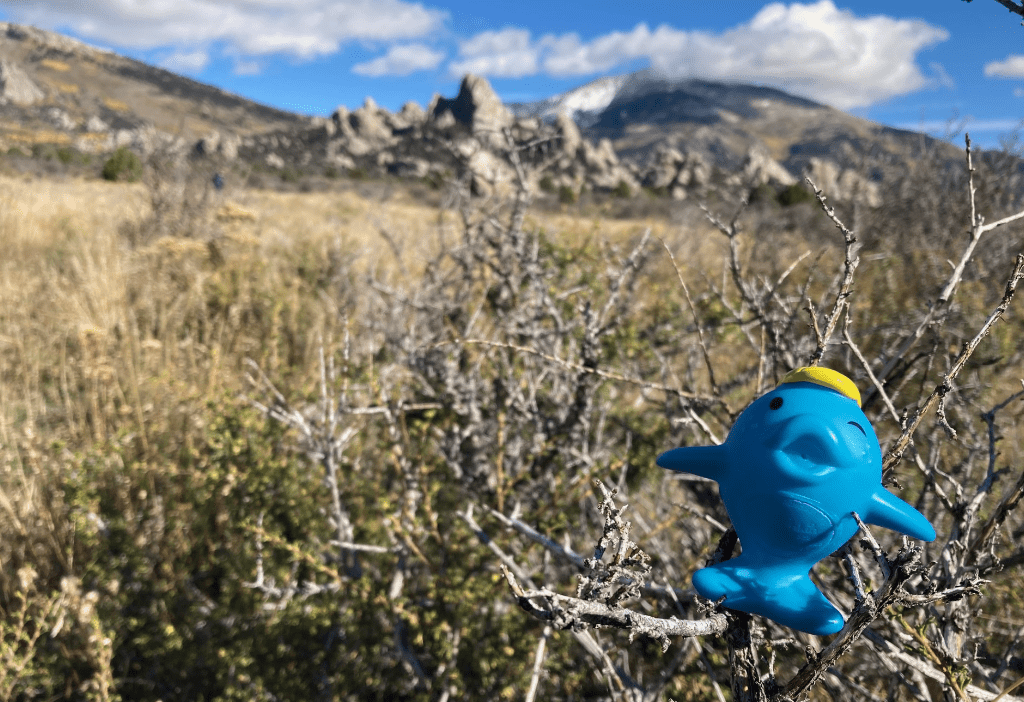
Fast-forward to a couple of weeks ago when I watched a new video of Ryan Holiday speaking to an audience of marines. I was struck by how much of his talk tied into the Three Zen Stories upon which the Eternal Fishnu’s teachings are based. Here is a very brief summary of the three Zen stories:
- The Empty Cup – Emptying your Earthly brain of what you already know in order to make room for absorbing and/or upgrading the knowledge that you need right now.
- Is That So? – Recognizing that full acceptance of the current situation (Now) frees you to let go of what you already know … so you’re able to empty your cup … to refill it with what is happening now. And also fully equally accepting the opportunity to learn in situations that might be deemed good or bad.
- The Man with the Bag – The understanding that Now is always a moving target – change is constant. Therefore, it is a never-ending refilling our cup. Life is a phenomenon of time, which means change. Otherwise, the Universe is just a static picture.
The three stories are not separate bullet points. They intertwine around the truth of constant change. We must fully accept, without compromise, what is right in front of us. We must keep an open mind to blend into Now. We live knowing the Universe is an eternal process, of which we are integral.
The recent Ryan Holiday video is very rich and encapsulates so much in its 46 minutes. I highly recommend watching it. I won’t cover every aspect, since this blog is quite along already. Here are points I found especially noteworthy:
- 1:50 – It’s mentioned that the Stoics were people out in the world facing real struggles echoes the fact that many ancient Stoics were statesmen, emperors, and even a former slave out in the real world, such as Seneca, Marcus Aurelius, and Epictetus, respectively. That spoke to me much since I study Zen mostly through my work as a software developer and less so through books.
- 6:33 – “In any situation – no matter how bad or seemingly undesirable it is – we have the opportunity to practice a virtue.” This reminds me of Is That So?
- 7:30 – “We don’t control what happens, we can control how we respond.” It’s a follow-up to “Is That So?” in that Hakuin (the hero of the story) responds to all situations in a calm, unpanicked manner.
- 11:40 – “Trust the Process.” “Do your job.” “Show up every day.” Do not get too much in the future. This is The Man with the Bag. “Trust the Process” deserves its own blog. For now, see what Scott Adams says about “systems vs. goals”.
- 13:10 – “Step by Step, action by action, Incremental Steps.” Again, “Trust the Process.” This captures the Stoic emphasis on continuous, diligent effort and self-improvement.
- 15:06 “Trust the process, not as a means to an end.” “No matter what anyone says or does, my task is to be good.” This is The Man with the Bag. It is a practice towards blending in fully with what is, even if it doesn’t match what you think it it should. When we are constantly meditating, we’ve fully blended in and are “One with the Universe”.
- 20:20 “It is impossible for a person to begin to learn what he thinks he already knows” – Epictetus. This is “The Empty Cup”.
Is That So?

Many of our current cultural memes share influences from Stoicism. One of the most well known is the Serenity Prayer, a cornerstone part of Alcoholics Anonymous practice and cubicle walls at work:
“God, grant me the serenity to accept the things I cannot change,
Courage to change the things I can,
And wisdom to know the difference.”
It certainly shines in the same way that Marcus Aurelius put it two millennia ago:
“You have power over your mind – not outside events. Realize this, and you will find strength.”
That’s the catch – just about all you have control over is your mind, the way you choose to respond to circumstances. Not control over others, no Jedi mind tricks. Epictetus says:
“Some things are in our control and others not. Things in our control are opinion, pursuit, desire, aversion, and, in a word, whatever are our own actions. Things not in our control are body, property, reputation, command, and, in one word, whatever are not our own actions.”
Because we only have control over our decisions, we only have control over what we are facing right now, in this minute. Not worrying about a future event. Mark Twain said: “I’ve suffered a great many catastrophes in my life. Most of them never happened”.
“The whole future lies in uncertainty – live immediately” – Seneca
In the Teaching of the Eternal Fishnu, this is embodied in the story , “Is that so?” Good or bad, it is an opportunity to be kind and help someone or to build our strength. It kind of reminds me of options trading where traders can make money whether stocks go up or down – even though there’s something not right about that.
In judo, there is the tori and the uke, the thrower and the one being thrown. Each person takes their turn practicing the throw. But there is actually much more to learn as the one being thrown, the uke. You learn how not to make it easy to be thrown – the proverbial “use your opponent’s energy against themselves”. You learn how to fall so you can get right back up. You learn what it feels like before you are thrown, which gives you the opportunity to counter.
I obviously don’t condone physical fights, but “winning” is very often more a function of who gets punched in the face and doesn’t freak out, is able to keep their wits about them. To that end, another philosopher I often quote is Mike Tyson – “Everyone has a plan until they get punched in the face.”
The future is not in our control. However, our Gift of Sentience enables each of us to be a intricately versatile piece of the Universe made alive – to paraphrase Ralph Waldo Emerson.
The Man With the Bag

“Is that So?” means we fully accept what is in front of us. But we might still fear it because we’re sentient and have learned what horrible things might come next. How can we be aware of something bad coming from what is right in front of us when we should be 100% accepting of it?
If there is something we can do, that’s one thing. The thing we shouldn’t do is panic and take unnecessary and prematurely foolish actions. What we can do is mindfully prepare. That is the gift of sentience – we have more choice than what instinctive impulsiveness offers.
Doesn’t preparing for something contradict with being in the Now? Aren’t we suffering a great many catastrophes poor that probably won’t happen, just like poor Mark Twain?
Preparation shouldn’t be seen as fretting too much about a bad event we can see coming. It’s actually about improving yourself which improves for chances for success. It might seem like you’re obsessing with the future event, but it’s really about sharpening yourself now. What else might you be doing? Scrolling through Tik Tok? You are sentient – you do more than live to grow, reproduce, and die.
When I saw ChatGPT showing up in the mainstream news (not my tech news feeds) in November 2022, that was an “Is that So?” moment for me. I knew my work life was about to take a big swing just a couple years after what is Version 5.0 of my career. Fortunately I think this is Version 5.5 and not 6.0?
It’s been a very rough and tumble year since last November. Since then, follow-up events related to AI (some of equal significance to the appearance of ChatGPT) have compounded the effect. To think I had considered running out the clock for a couple years in a local IT department. Instead, I’m a month into a four-month commitment writing a book on AI with BI.
When we prepare for something, if that something never comes, it isn’t time wasted. When we properly prepare, we learn more than we think we did. We comes out better regardless. We learn how to learn and we learn how to think.
For example, I’ve been teaching myself guitar for almost three years. I’ve learned more than how to play guitar (well, I still don’t really “play”). I’ve raised my ability to appreciate and utilize the sense of sound, better complementing my vision-dominant experience of the physical world. I’ve “met” many new friends through their guitar teaching videos and learned of new ways to teach the things that I teach. I’ve been introduced to other adjacent and intricate arts – that of crafting acoustic guitars, and even picked up a new appreciation for woodwork, hand-crafting in general.
We will always explore a few paths that may not be of interest now. But there are no paths to nowhere – all paths go somewhere. How many great inventions are from earlier fruitless paths that made sense later? Today, in this day of ChatGPT, many seeming dead ends I explored over the last two decades have provided a big head start for me.
There is no finish line outside of our brains. Seeking the finish line is seeking a time when we will not be bothered by anything anymore. That’s not a good strategy in a Universe that flows through time and that time equals change. If there is no change, there is no such thing as time.
The Empty Cup

This recent sudden awareness of AI in the general public is close to that of being invaded by aliens from another world. AI’s creativity isn’t as nuanced as our collective human creativity. But it is smarter in other ways. That’s not that different from bears being stronger and faster than humans, but not as industrious (not as sentient or sapient). Even amongst we humans, we’re all better or less skilled in some facets than others.
AI such as ChatGPT is like an alien from another world in that it doesn’t look like a human or think like one. But it is also a reflection of our entire human past. It’s trained on the majority of what billions of us have put down into words, directly and indirectly. It is a single snapshot of our world-scoped culture, captured in a way none of us could.
It’s more than just a gigantic library, more than the Internet. It has integrated facts across humanity into knowledge, an unprecedented presence – even if it’s not quite what I’d readily call “understanding”. But it’s of limited help when I’m working on something novel. I asked ChatGPT about that:

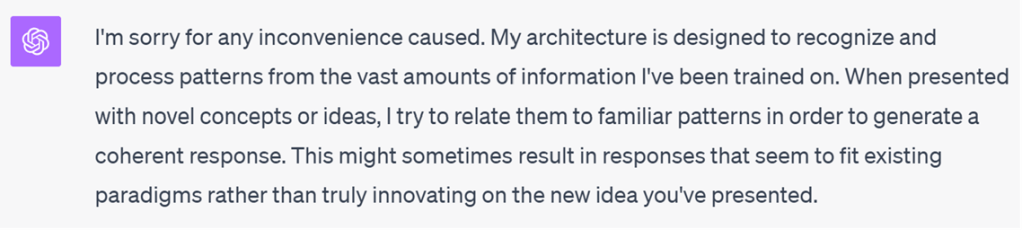
ChatGPT and other AIs like it, live in an un-empty-able cup. At least for now. Give it credit, though, for not roasting me on the typo in my prompt.
It’s not hard to find deficiencies in anyone/anything and shine a massive light on it. AI has its limitations, but it is Stoic in how it relates to us. It will not fear us, it will not tire, it will not whine, it doesn’t get offended. That’s a big part of why many are afraid of it.
To be clear, I’m very wary of how our relationship with AI might evolve. I’ve seen all the Terminator movies. The bright side is that either way, AI all by itself, is enough to force us to be mindful of our actions more than ever.
There is much talk about controlling or even banning AI. It just seems, though, like one of those cases where controlling it would be like controlling the weather or herding cats. The genie is out of the bottle. We might have some success making it rain, bringing down the temperature, or controlling the flora and fauna. But we pull one string and three things break – maybe not immediately, but usually.
There will undoubtedly be cascades of unintended side effects we never would have thought of. As a software developer, I know that it’s impossible to guarantee zero problems when rolling out software to production. Even a “full production replica” QA system doesn’t quite match the real world. Similarly, the only true model of the real world is the real world.
Everything changes when it’s done on a massive scale. What makes the AI such as ChatGPT so revolutionary is that it is readily available to a very large-scale audience of direct users. That means it’s easy to access, easy to sign on to, it’s brain-dead to use, and it works very well. Those are the same qualities that set Google up over 20 years ago to become the powerhouse it is today.
Google also came along at the right time. Yahoo came along too early at the very beginning when it wasn’t really that easy to sign on with an ISP, dial-up, and navigate. By the time Google came along with a better mousetrap, the Internet was well socialized.
Today the Internet is seamless. It’s on our phones. How much more seamless can that be? Additionally, access to massive data systems are sort of close to seamless in the Cloud. That enabled developers of AI to experiment at massive levels. Massive scales are a major part of the secret sauce of ChatGPT, just like massive numbers of neurons and synapses are a major ingredient to our versatile human sentience.
It’s actually OK to spend much time finding fault in something. We should be skeptical. But we usually misunderstand everything to some level, especially early on. Our skepticism should be driven by through improvement of our understanding, not to vanquish the new thing, so we can make better judgements. We shouldn’t make judgements in any other way. Likewise, the “embracers” should tread with a lot of caution. If the new thing is good … good. If it’s indeed bad … thank God for the skeptics. From both direction, they will get to understanding.
Personally, I’m an embracer of AI, but embracing with caution. The efforts to get the genie back in the bottle are likely worse than what might be possible bad-leaning outcomes should we embrace it.
I’ve often heard of the recent AI dubbed, “The Fourth Industrial Revolution”. Unlike the “Third Industrial Revolution”, the “Digital Revolution”, there is something less mechanistic than the software I know and love. I don’t hear “Just one number, please” or sense distaste from my customers when I reply, “Well, it depends”, as much as I’ve been accustomed to over the decades.
The AI of today is in my opinion the most stunning event over my 45 years of software development. In my early 60s, I didn’t expect to dive into anything more as deeply as I have. To do so, I’ve emptied my mind of expertise around my old favorite technologies. That is, I’ve dumped the details, but not the abstracted lessons.
Maybe these AIs such as ChatGPT, these reflections of all of humanity, are the very thing we need in order to see what must be done. “Look in the mirror”, as the saying goes.
Stoicism and Zen are Skills
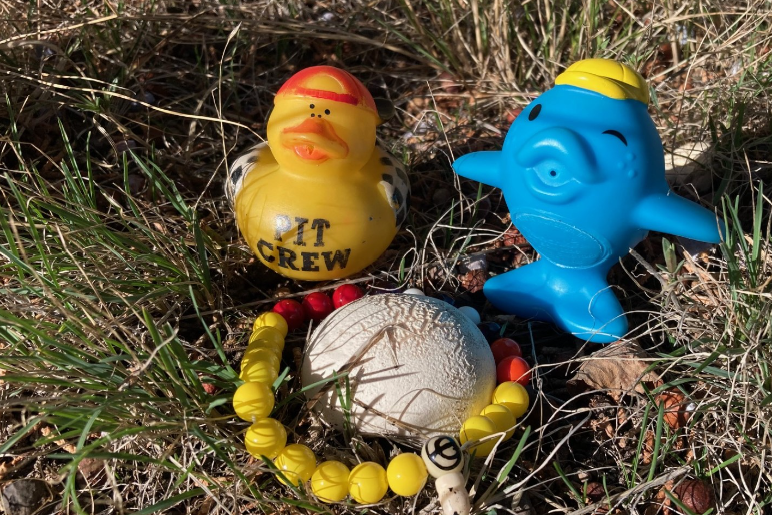
A part of my morning ceremony includes the Alan Watts phrase, “Fear implies Courage”. That means there is no courage if you’re not afraid. I mention this because courage in one of the central aspects of Stoicism.
Stoicism, Buddhism/Zen is a skill that we train towards each of us becoming a sentient species of one.
“Don’t explain your philosophy. Embody it.” – Epictetus
And in the vastness of the Universe, in some subset of dimensions, there is more than enough for the billions of us to shine. “What if AI takes all our jobs?” That’s a terrible underselling of the magnificence of us. We don’t know what will happen. Our Gift of Sentience give us the job to see for ourselves.
Buddhism, in many of its traditional sects, possesses significant “supernatural” or metaphysical dimensions. In contrast, Stoicism largely steers clear of such elements. The Zen that I practice, while rooted in Buddhist traditions, underwent various transformations as it traveled from India to Japan. During its passage through China, Zen absorbed profound influences from Daoism and Confucianism. Furthermore, once it reached Japan, there was an interaction with the indigenous Shinto beliefs.
As a result, Zen kind of leans away from the “supernatural” emphasis seen in other Buddhist traditions, making it more akin to the philosophical tenets of Stoicism. I should mention that in the West today the approach Buddhism and Zen tends to be treated more as a philosophy than a religion, emphasizing the skills of mindfulness, meditation, and ethical teachings.
However, it’s hard for me to care about that matter since I see the Rubber Ducky Buddha of Joliet and the Eternal Fishnu dart in and out of my space-time realm on a daily basis. But I’m sure physics will be able to explain that some day.
Stoicism as a “War-Time Zen”
The way Stoicism seems to weave in and out of my life is as I phrase it, a “War-Time Zen”. When something intense pops up, I still greet it with “Is that so?”, but the timeframes are squeezed, the hurdles are taller, and the margins for error narrow. Yes, Stoicism is a way for all times, but Zen is the path I chose and followed for a long time. Stoicism can and does bountifully enrich my path without having to walk over to another one.
Both Zen and Stoicism offer guiding principles for navigating the ebbs and flows of life. But like many other pairs of similar concepts or methodologies, each shine most brilliantly under different circumstances. Zen, with its emphasis on mindfulness, meditation, and inner tranquility, seems particularly suited for times of relative peace or “normalcy”. It teaches practitioners to be present, cultivate awareness, and harmonize with the world around them, making it an ideal philosophy for periods of stability or minimal external turbulence. Zen practitioners seem calm and content.
On the other hand, Stoicism, founded in the bustling times of ancient Athens and practiced by Roman emperors amidst political chaos, seems forged for very challenging times. Its principles encourage resilience, emotional fortitude, and a focus on what’s within one’s control. Stoicism doesn’t just promote endurance of hardships but actively teaches one to derive wisdom and strength from them. This reminds of me the disciplined mindset of the subset of samurai Zen masters versus Zen masters of non martial arts.
In contemporary terms, and as we stand on the cusp of unprecedented advancements like AI, our societal and individual challenges often exceed what might be considered “normal” intensity. In such “extraordinary” times, Stoicism might offer a kind of “war-time Zen” for those whose lives have just been turned upside-down. It arms the spirit with courage and perspective, making the unpredictable more navigable.
That’s not to say Zen lacks resilience or Stoicism lacks tranquility; both philosophies encompass a broad range of human experiences. However, just as martial artists might adjust their techniques based on the nature and intensity of a challenge, individuals can find specific resonances in Zen during times of peace and in Stoicism during more turbulent periods.
Bodhi Day 2023

Bodhi Day (the Secular Bodhi Day) is in less than two months, December 8, 2023! For those new to Bodhi Day, I’ve written about my first Bodhi Day in 2017. For those who have been through Bodhi Day with me over the past six years, this different facet presented here through the lens of Stoicism should provide a fresh look.
The Lunar Bodhi Day (based on the moon calendar) is on January 18, 2024.
Faith and Patience,
Reverend Dukkha Hanamoku
 Bodhi Day